You've filled out a skincare quiz before. Eight questions, maybe ten.
"Is your skin oily, dry, or combination?"
"How does your skin feel by midday?"
"What's your main concern?"
Then you get a routine, one that's supposed to be personalised. Except it isn't, not really. It's personalised to how you described your skin, not to what your skin is actually doing. Most of the time, those two things don't match.
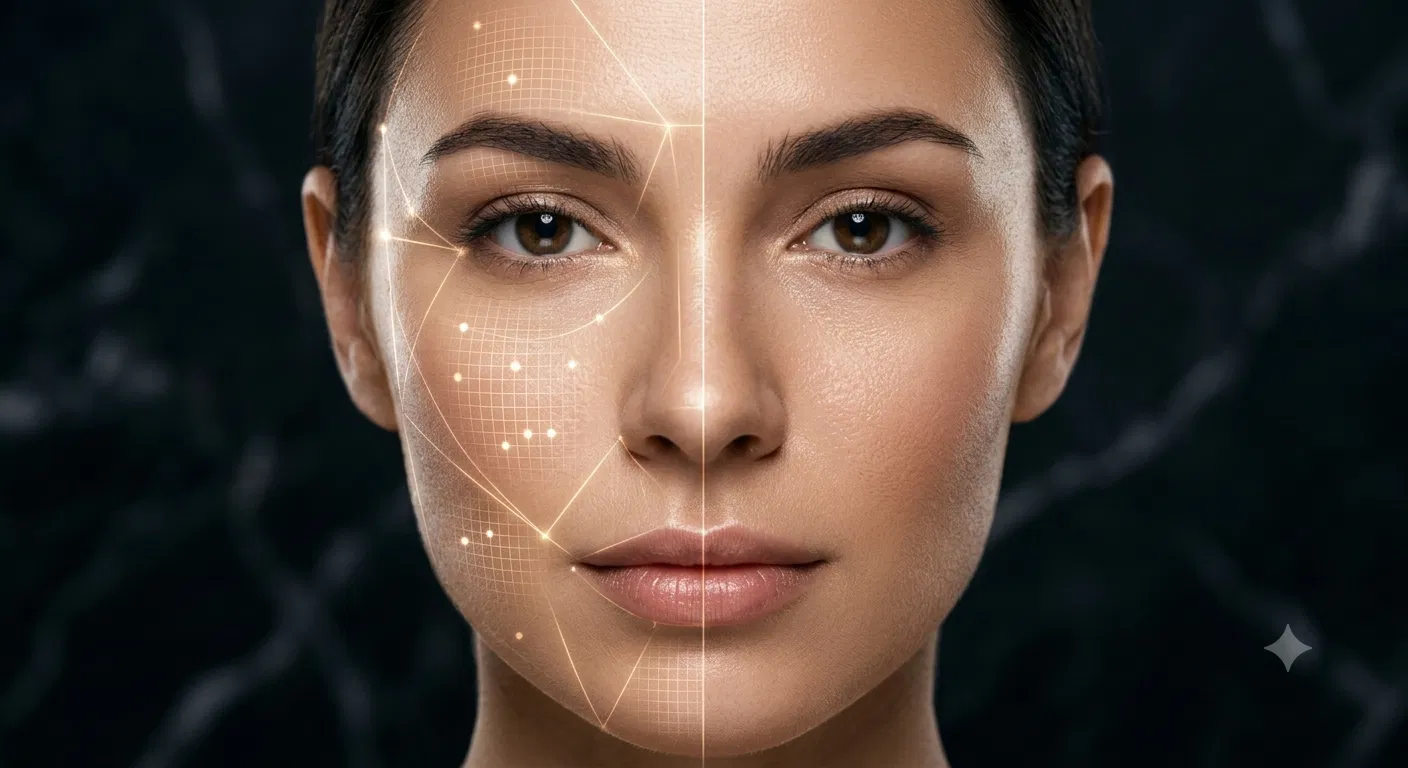
That gap has a name: dermal blindness.
What Dermal Blindness Actually Means
Dermal blindness is what happens when a skincare recommendation is built on self-reported guesses instead of real skin data. It's not a medical term, it's a description of a very common, very avoidable problem.
Here's why it happens so easily: your skin changes constantly.
- Seasonal shifts
- Sleep quality and stress levels
- Regional water hardness
- Products applied the week before
A quiz filled out once, maybe months ago, freezes a single moment in time and treats it as permanent truth. The routine you're following ends up responding to a version of your skin that no longer exists.
"A quiz asks you to describe your skin. A scan reads it."
Why "Oily, Dry, or Combination" Isn't Enough
Most people genuinely don't know how to answer skin-type questions accurately.
Is your T-zone shiny because of excess oil production, or because your skin barrier is dehydrated and overproducing oil to compensate? Both look identical in the mirror, yet they call for opposite routines.
This is the core issue with quiz-based skincare: it asks you to self-diagnose using categories that even experienced estheticians struggle to eyeball, let alone confirm from a multiple-choice question. The result is routines that treat symptoms that aren't there, or miss the ones that are.
What Actually Reading Your Skin Looks Like
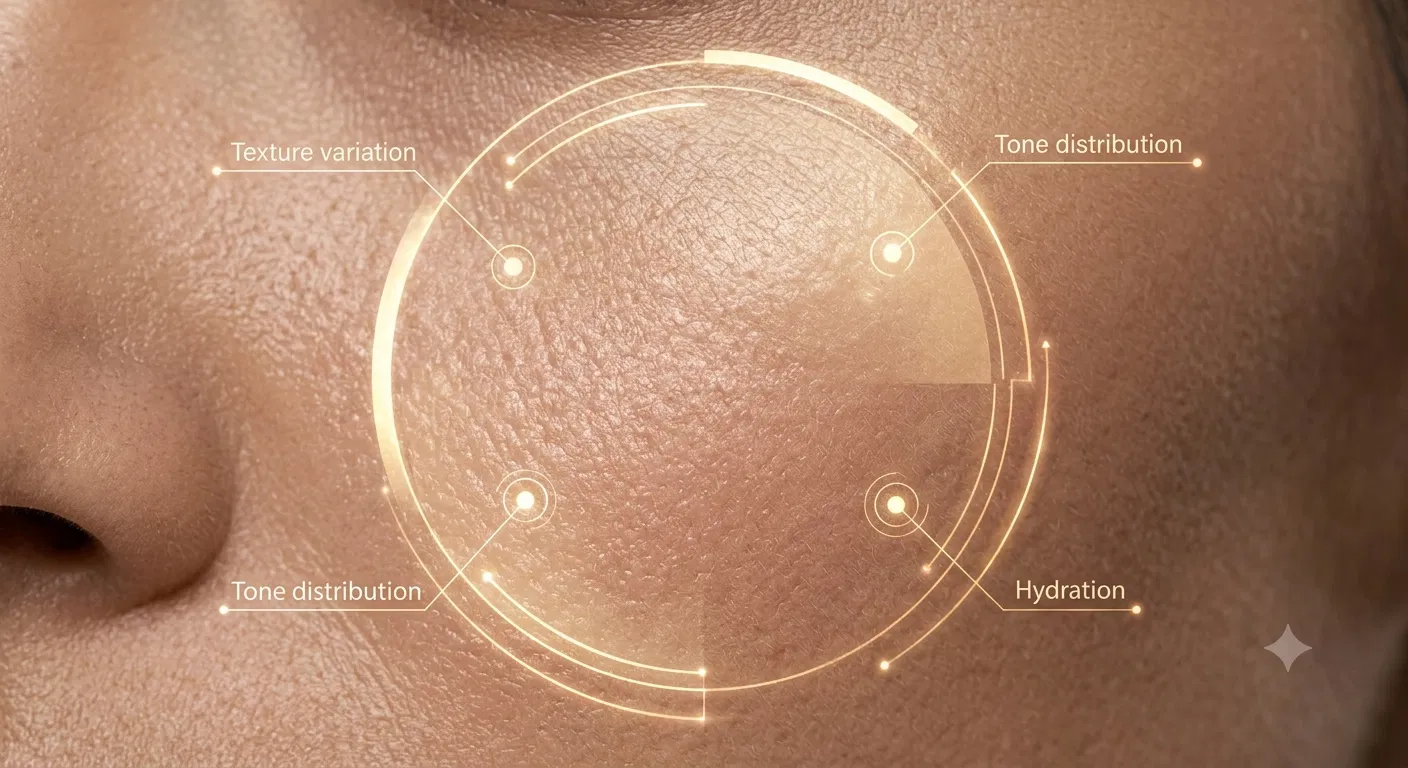
Real personalisation requires real signal. Not "how does your skin feel," but direct, objective measurement of what's happening at that exact moment, across five key biometric markers:
| Biometric Marker | What's Actually Measured |
|---|---|
| Texture | Surface smoothness vs. micro-unevenness |
| Tone | Pigmentation distribution across the facial surface |
| Hydration | Actual subsurface water content, not "tightness" |
| Pigmentation | Visible discolouration and uneven depth |
| Condition | Overall skin health signals, barrier state, and visible stress |
This is the fundamental shift from guessing to reading.
How The Balanx System™ Fixes This
The Balanx System™ was built specifically to close the dermal blindness gap. Instead of a questionnaire, your skin is scanned directly using your phone camera.
The system reads texture, tone, hydration, pigmentation and condition directly, and builds your protocol from that data, not from how your skin is assumed to behave.
Quiz path: Questionnaire → self-reported assumptions → static routine
Balanx path: Scan → direct biometric data → evolving protocol
This means two people with the exact same self-reported "skin type" can get completely different routines, reflecting their true biometric differences. As your skin changes, your data updates, so your protocol can evolve with it instead of staying locked to an outdated answer.
We're not diagnosing anything. We're reading what's there, and building from that instead of a guess.
The Takeaway
If a routine has ever felt like it should be working but wasn't, dermal blindness is worth considering as the reason why. The products themselves may not have been wrong. The starting point, a quiz result instead of real skin data, was never accurate to begin with.
See What Your Skin Is Actually Saying
The Balanx System™ is in beta now for UK users. Scanning replaces guessing, if you want to see what your skin actually looks like instead of what you think it looks like, that's the whole point.